When the Stock Market Takes a Hit, What Does It Mean for Real Estate?
When the Stock Market Takes a Hit, What Does It Mean for Real Estate?
Why a volatile stock market may create opportunities for real estate buyers, what it means for Southern Utah's luxury market, and why some investors are looking at property as a place to put their money.
The stock market has been on a rough ride lately. With technology stocks taking a beating, concerns about artificial intelligence valuations, and major indexes entering correction territory, investors are once again asking an important question: Where should I put my money when the markets become unpredictable?
For some, the answer is to stay invested and ride out the volatility. For others, it's an opportunity to reconsider how much of their wealth is tied to the stock market and whether real estate deserves a larger role in their investment strategy.
And then there are those who were planning to purchase real estate using money from their investment portfolios, only to find that a market downturn has changed their purchasing power.
These competing forces make for an interesting real estate market, particularly here in Southern Utah.
Real Estate as an Alternative to Wall Street
During periods of stock market uncertainty, some investors look toward tangible assets. Real estate has long been one of those alternatives.
Unlike stocks, real estate is a physical asset. It can provide rental income, potential appreciation, tax advantages, and, depending on the property, personal enjoyment. For buyers concerned about volatility in publicly traded investments, owning a well-selected property can offer a different kind of diversification.
That doesn't mean real estate is immune to economic downturns. Property values can decline, liquidity is limited, and ownership comes with expenses. But for investors with a longer-term outlook, real estate can be an attractive component of a diversified portfolio.
In fact, some buyers view a market downturn as an opportunity to move a portion of their investment capital into property, particularly when sellers become more flexible and inventory increases.
When Your Stock Portfolio Is Your Down Payment
There is another side to this equation.
Many real estate buyers, particularly those purchasing second homes or luxury properties, rely on investment portfolios to fund their purchases. When stocks decline, the money they intended to use for a down payment or cash purchase may no longer be available at the same value.
This can delay transactions, reduce purchasing power, or cause buyers to reconsider their price range.
It's one reason stock market volatility can affect luxury real estate disproportionately. Higher-priced homes often attract buyers whose wealth is tied to investments, business ownership, and retirement accounts.
However, a declining stock market doesn't necessarily eliminate demand. Some buyers have substantial cash reserves, diversified portfolios, or other sources of capital that allow them to move forward.
Could an IRA Be Used to Purchase Real Estate?
One option that many investors don't realize exists is purchasing investment real estate through a self-directed IRA.
Traditional IRAs and Roth IRAs are commonly associated with stocks, bonds, and mutual funds. However, IRS rules do allow certain IRAs to invest in real estate, provided the account is structured properly and all applicable regulations are followed.
For example, an investor with a self-directed IRA might purchase an investment property through the IRA. Rental income flows back into the retirement account, and eligible property expenses are paid from the account.
There are important restrictions, however. The property cannot be used for the personal benefit of the IRA owner or certain family members. The owner generally cannot use the property as a vacation home, perform prohibited transactions, or personally benefit from the investment. The IRS has strict rules governing these arrangements, and violations can result in serious tax consequences.
A self-directed IRA also requires a qualified custodian, and not every custodian permits real estate investments. Financing can introduce additional tax and compliance considerations.
This isn't a strategy for everyone, but it illustrates that real estate can be incorporated into retirement investing in ways beyond simply selling stocks and purchasing property personally. Anyone considering this approach should consult a qualified tax professional and self-directed IRA specialist before proceeding.
A Flood of Inventory Creates Opportunity for Buyers
While the stock market gets the headlines, another important factor is developing in real estate: inventory.
When the number of available homes increases, buyers gain something they may not have enjoyed during the frenzied markets of recent years: choices.
More inventory generally means less competition for individual properties. Buyers have more time to compare homes, evaluate locations, negotiate terms, and make decisions without feeling pressured to act immediately.
It can also create opportunities to negotiate:
-
More flexibility on purchase price.
-
Seller contributions toward closing costs or interest-rate buydowns.
-
Repairs and inspection concessions.
-
Longer due-diligence periods.
-
Better opportunities to negotiate on properties that have been sitting on the market.
For buyers, this is an important distinction. A market with abundant inventory doesn't necessarily mean every property is a bargain, but it does shift negotiating leverage.
The key is identifying properties that are realistically priced and sellers who are motivated to make a deal.
Why Southern Utah Is Different
Southern Utah has some characteristics that distinguish it from many other real estate markets around the country.
Our market is influenced by more than local employment, first-time buyers, and traditional housing demand. Retirement money and second-home purchases play a significant role in the region's luxury and resort-oriented segments.
For many buyers, Southern Utah represents a place to enjoy retirement, escape colder climates, spend time with family, or own a second home in an area with exceptional recreational opportunities.
Others view property here as a way to diversify their holdings and park a portion of their wealth in an asset they can actually enjoy.
We are, after all, a resort destination.
Between Zion National Park, Snow Canyon, world-class golf, red-rock scenery, outdoor recreation, and a climate that allows for an active outdoor lifestyle, Southern Utah offers a combination of amenities that is difficult to replicate elsewhere in the United States.
That uniqueness matters. While economic conditions and investment portfolios certainly influence purchasing decisions, the appeal of owning a home in a destination like this extends beyond the financial markets.
For some buyers, it's an investment. For others, it's a lifestyle decision. Often, it's both.
Are There Bargains in the $2 Million–$3 Million Luxury Market?
One of the more interesting opportunities right now is in Southern Utah's $2 million to $3 million luxury market.
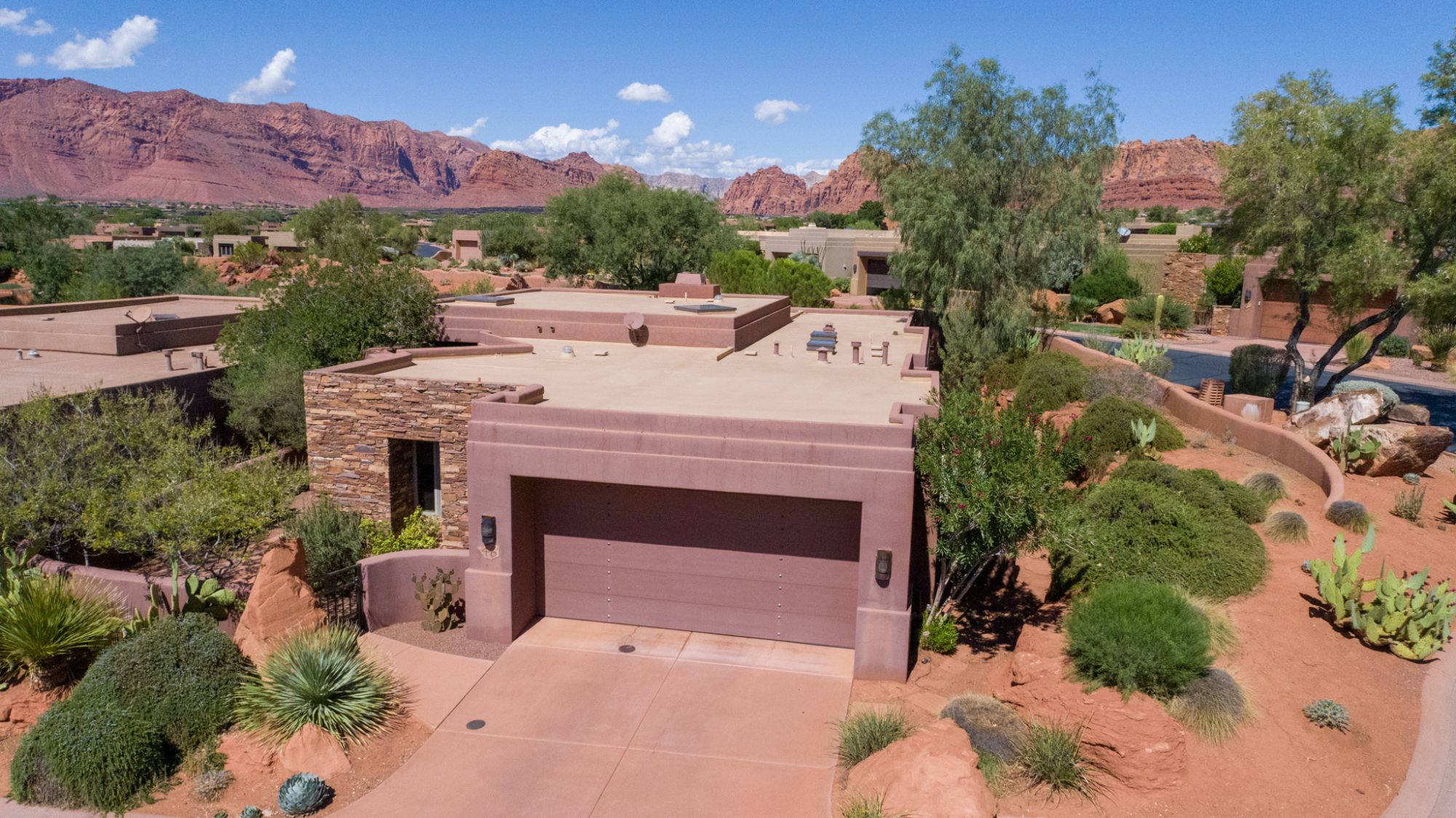
This is a segment where buyers may find extraordinary custom homes, distinctive architecture, private pools and spas, golf course locations, expansive outdoor living spaces, and views that are difficult or impossible to duplicate.
Some properties represent years of planning, substantial construction costs, and specialized craftsmanship. Recreating a comparable home today could cost considerably more than purchasing an existing one.
That doesn't mean every luxury listing is automatically a bargain. Pricing, condition, location, construction quality, and seller motivation all matter. But when inventory is elevated and buyers have more negotiating power, opportunities can emerge that might not have existed in a more competitive market.
For a buyer with available capital, this can be an especially interesting time to evaluate properties that offer exceptional value relative to their location and quality.
The best opportunities are often found in homes that are unique, well-built, and difficult to replace—not necessarily the largest or most expensive properties on the market.
The Bottom Line: Opportunity Doesn't Disappear, It Changes
A stock market correction can create uncertainty, but it can also create opportunities. Some investors may shift a portion of their wealth toward real estate, while others may postpone purchases because their portfolios have declined.
Meanwhile, buyers in markets with growing inventory may find themselves in a stronger negotiating position than they've enjoyed in years.
Here in Southern Utah, our unique combination of retirement buyers, second-home purchasers, resort amenities, and distinctive luxury properties adds another dimension to the equation.
If you're considering purchasing a home, particularly in the $2 million to $3 million range, this may be a worthwhile time to take a closer look. The right property, at the right price, can represent an opportunity that goes beyond the daily movements of Wall Street.
Sometimes the best real estate opportunities don't appear when everyone is feeling confident. They appear when uncertainty creates room for a thoughtful buyer to negotiate.
Dave Diegelman | Your Realtor for Life
Equity Real Estate | St. George, Utah
www.UtDreamHomes.com
This article is for general informational purposes and is not investment, tax, or legal advice. Real estate investments involve risk, and self-directed IRA transactions should be reviewed with qualified tax and legal professionals.
Categories
- All Blogs (88)
- Buying a Home (23)
- Flipping (9)
- Home Improvement (1)
- Hurricane Utah (9)
- Landscaping (4)
- Market Report (39)
- NAR Settlement (3)
- National Parks (2)
- Notice of Default (1)
- Real Estate (65)
- Real Estate News (43)
- Rehab (3)
- Remodel (6)
- Retirement (12)
- Selling a Home (12)
- Staging (7)
- Towns (7)
Recent Posts